What Is Multimodal Travel? More Ways to Go
A late train, a short taxi ride, a borrowed bike, and a friend’s extra seat can get you farther than any one option alone. That is the simple answer to what is multimodal travel: using two or more types of transportation to complete one journey.
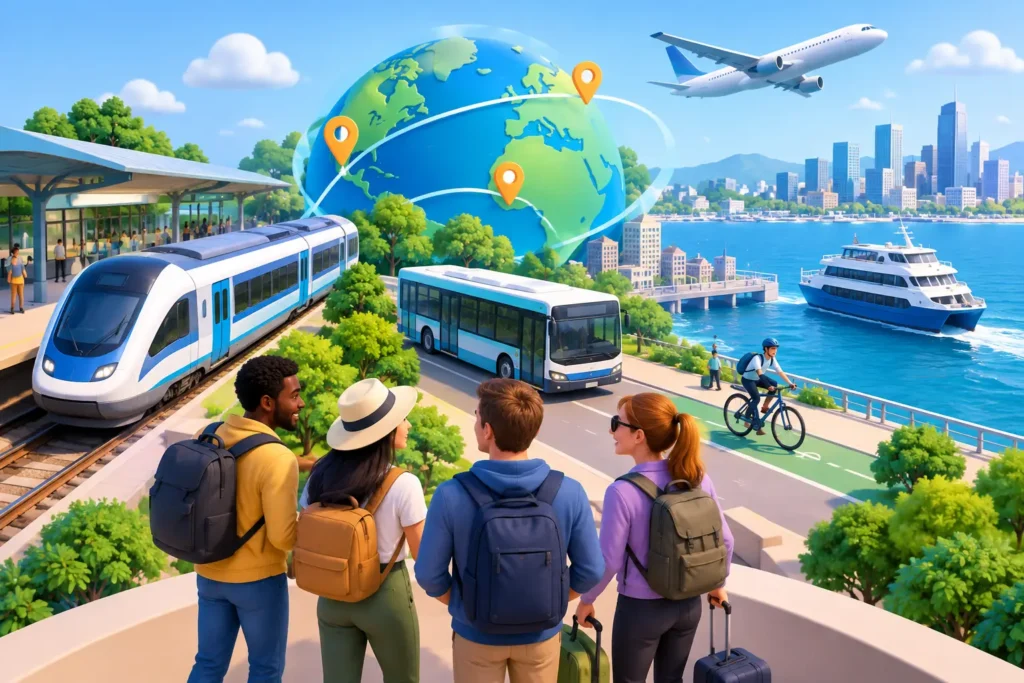
It might mean taking a bus to the airport, flying to another city, then sharing a ride to your final stop. Or biking to a train station, catching the train downtown, and walking the last few blocks. Multimodal travel is not a complicated travel category reserved for city planners. It is how a lot of real trips already happen.
For independent travelers, it creates more choices. For budget-conscious travelers, it can lower costs. And for anyone tired of traveling alone, it creates more moments to share the ride, split expenses, and meet someone going your way. 🚗🚌🚆✈️🚲
What Is Multimodal Travel, Exactly?
Multimodal travel combines different transportation modes within the same trip. A mode is simply a way of getting around: car, train, bus, subway, plane, bike, ferry, taxi, rideshare, or even walking.
The key is that the modes work together. Rather than asking, “Should I drive or take the bus?” multimodal travelers ask, “What combination gets me there at the right price, time, and comfort level?”
A weekend trip from Chicago to a music festival is a good example. You could take a local bus to the train station, ride the train to a nearby city, then join other travelers in a shared car for the final stretch. Each part has a purpose. The bus solves the first-mile problem. The train covers distance without parking stress. The shared ride reaches a destination public transit may not serve.
That is multimodal travel in action: choose the best option for each leg instead of forcing one vehicle to do everything.
Why Travelers Mix Transportation Modes
No single mode wins every trip. Driving can be convenient, but gas, parking, tolls, and long hours behind the wheel add up. Flying covers huge distances quickly, but airports are rarely your exact starting point or final destination. Buses and trains can be affordable, though their schedules and routes may leave gaps.
Mixing modes helps fill those gaps.
For students heading home for a break, a shared ride to the airport may cost less than long-term parking or a solo taxi. For a digital nomad moving between cities, a train plus a local bike can be more practical than renting a car. For backpackers, joining someone’s road trip for one leg can turn an awkward connection into the best story of the trip.
There is also a sustainability angle. Sharing available seats and using public transportation can reduce the number of cars needed for the same journey. It will not make every trip zero-impact, especially when flying is involved. Still, choosing a bus, train, bike, or shared car for the parts of a trip where they make sense can reduce unnecessary solo driving.
Most of all, multimodal travel gives you backup plans. If one route is full, expensive, delayed, or simply not going where you need to go, another mode may keep the trip moving.
The Four Parts of a Multimodal Trip
Multimodal trips often sound complicated because they have more than one moving piece. In practice, planning becomes easier when you break the journey into four questions.
1. How do you reach the main route?
This is often called the first mile. It is the trip from your home, campus, hotel, or neighborhood to the station, airport, highway pickup point, or ferry terminal.
Maybe you walk to the subway. Maybe a friend drops you off. Maybe you find a traveler with an open seat heading toward the same airport. The first mile matters because a cheap train ticket is not much help if getting to the station costs more than the ticket itself.
2. What carries you the longest distance?
The main leg is usually the part that covers the most miles. It may be a flight, intercity bus, train, boat, van, or shared car. Your best choice depends on timing, budget, luggage, comfort, and how much flexibility you need.
A flight may make sense for a cross-country trip. A shared car or bus may be the smarter call for a three-hour route between cities. A train can be ideal when you want to work, read, or skip the stress of traffic.
3. How do you get to the final destination?
The last mile is where many plans fall apart. You arrive at a station, but your hostel is eight miles away. Your flight lands late, but the local bus has stopped running. The event venue is outside town, and taxis are suddenly expensive.
This is where shared transport can be especially useful. Connecting with someone already traveling from the terminal to the same neighborhood, campus, trailhead, or venue can save money and make the final stretch less stressful.
4. What happens if plans change?
Delayed buses, canceled flights, traffic, weather, and sold-out tickets happen. A smart multimodal plan leaves room to adapt. Avoid connections that are so tight one small delay ruins the whole day. Keep your meeting points clear, your phone charged, and your travel companions updated.
Flexibility does not mean accepting chaos. It means knowing you have more than one way forward.
Multimodal Travel Can Be Social, Not Just Practical
Travel apps have made it easier to compare routes, but the best part of a trip is not always the route itself. Sometimes it is the person who shares the ride.
A shared car to the airport can mean splitting gas and swapping local food recommendations. A ferry crossing can turn into a conversation with another traveler headed to the same island. A bus connection can be less intimidating when you have someone to navigate it with.
That is where a mode-agnostic platform matters. A trip does not have to fit neatly into “carpool” or “public transit” to be shareable. You might be looking for a passenger to split a taxi, a companion on a long train ride, or an open seat in a van headed to a festival.
TripShare is built around that bigger idea: any trip, any mode, anywhere. Post your planned route, match with people whose timing and travel style fit, chat through the details, then travel together. Share rides. Split costs. Meet travelers. 🌍
Of course, social travel works best with good judgment. Review plans before committing, communicate clearly about timing and expenses, meet in public places when appropriate, and trust your instincts. Being open to meeting people does not mean ignoring basic safety.
When Multimodal Travel Makes the Most Sense
Multimodal travel is especially useful when your destination is not directly connected by one affordable route. Think airports outside the city center, college towns, national parks, beach communities, festivals, ski areas, and smaller cities with limited transit.
It also helps when you are traveling at busy times. Holiday weekends, major concerts, spring break, and big sporting events can push up rental-car prices and fill direct routes quickly. Combining a train or bus with a shared ride may give you options that do not show up in a standard point-to-point search.
But it is not automatically the best choice for every trip. If you are carrying heavy equipment, traveling with very young children, have limited mobility needs, or face a tight deadline, fewer transfers may be worth paying more for. A cheap route with four connections is not a bargain if it leaves you exhausted or puts you at risk of missing something important.
The goal is not to use the most transportation modes possible. The goal is to choose the combination that works for you.
How to Plan a Better Multimodal Journey
Start with your non-negotiables. Decide when you need to arrive, what you can spend, how much luggage you have, and whether you prioritize speed, comfort, flexibility, or company. These choices make it easier to compare routes honestly.
Then map the whole trip, not just the longest leg. Check where terminals are located, how late local transportation runs, and how much time you need to transfer. Build in a buffer, especially if you are changing modes between a flight and ground transportation.
If you are sharing part of the trip, agree on the essentials before departure: pickup location, departure window, luggage space, cost split, and how you will communicate if someone is late. A quick chat upfront prevents confusion later.
Finally, stay open. The best route may not be the obvious one. A bus plus a shared ride may beat a pricey direct flight. A bike plus a train may be faster than sitting in rush-hour traffic. A travel companion may turn a long connection into the start of a new friendship.
Your next trip does not have to be one vehicle, one route, and one lonely seat. Put the pieces together, leave room for a little adventure, and see who is headed your way.