
Airport Ride Sharing That Makes Arrival Better
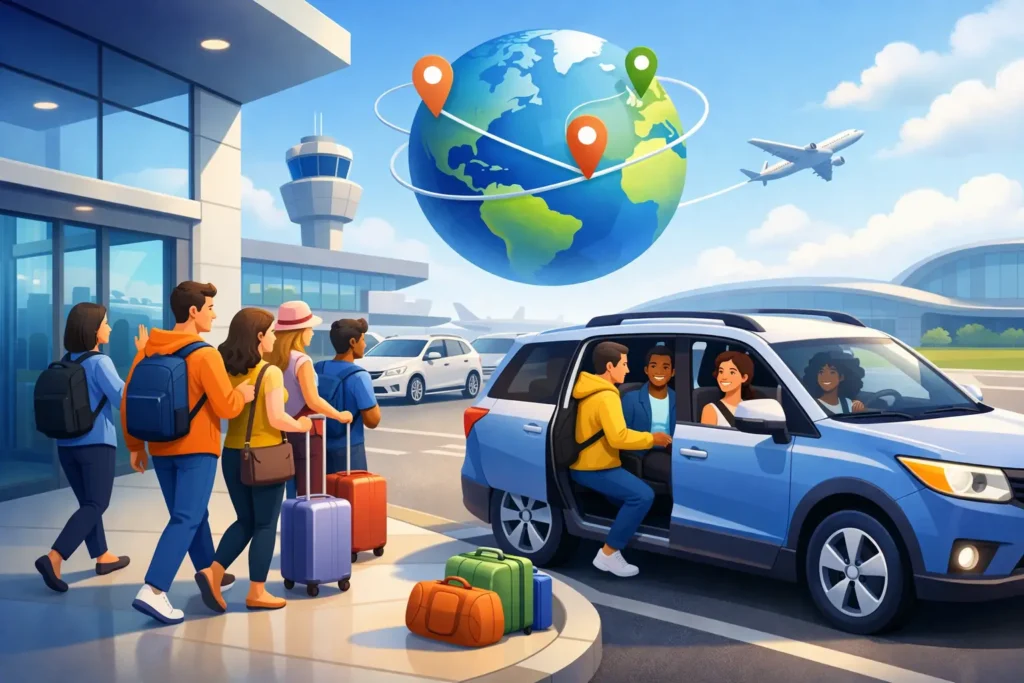
Your flight lands at 11:40 p.m. The train has stopped running, rides are surging, and a taxi line is moving at airport speed. Airport ride sharing gives that in-between stretch a better option: find people headed your way, split the cost, and start the trip with company instead of a stressful solo scramble. ✈️
For students arriving on a new campus, backpackers reaching an unfamiliar city, digital nomads chasing their next stay, or friends flying in separately for the same weekend, the airport transfer is often the most expensive and least social part of the journey. It does not have to be.
What airport ride sharing really means
Airport ride sharing is simply coordinating transportation with other travelers who have compatible arrival times and destinations. Sometimes that means taking an open seat in a car. Other times, it means sharing a taxi, arranging a van, catching the same bus, or traveling together on a ferry or train after landing.
That flexibility matters. A great airport connection is not always a carpool. In a city with strong public transit, sharing the route to the station may be the smart move. At a remote airport, a pre-arranged taxi split can beat waiting for an expensive ride alone. If several travelers are heading to the same hostel, conference, neighborhood, or campus, a van can make more sense than squeezing into separate vehicles.
The goal is simple: use the transportation that fits the trip, then share the journey when it works. 🚗 🚕 🚌 🚆
Why the airport is made for shared travel
Airports bring together people with the same immediate problem: getting from one place to another. Travelers may come from different flights, but many are headed toward the same downtown, beach town, university, event venue, or transit hub.
Sharing that next leg can lower the cost for everyone. Airport rides often carry flat fees, parking charges, tolls, pickup surcharges, or surge pricing. Splitting one larger ride can be far more reasonable than everyone booking separately. It can also help drivers fill empty seats when they are already traveling toward the airport or back into town.
There is an environmental upside, too. One shared car or van can replace several individual trips. That will not solve every transportation challenge, but it is a practical choice when the route and timing line up.
Then there is the human part. Landing somewhere new can feel isolating, especially after a delayed flight or a long travel day. A shared ride can mean swapping local tips, comparing itineraries, or simply having someone to laugh with while you search for the right pickup zone. You are not required to make a new best friend. But travel is often better when there is room for connection.
How to find the right airport ride match
The best match starts with a clear trip post. Share your arrival airport, date, approximate landing time, destination, transportation preference, and how many seats are available or needed. Add useful details without oversharing: a preferred pickup window, whether you have large luggage, and whether you are open to a taxi split, transit connection, or car ride.
A simple post could read: “Landing at LAX around 6:15 p.m. Friday. Heading to Santa Monica with one backpack. Open to splitting a taxi or joining a ride.” Clear posts help the right people find you faster.
Then filter for route, date, timing, and travel style. A traveler heading to the same city may not be a useful match if they land five hours later or need to make three stops. Look for overlap that is realistic, not just close enough on a map.
TripShare makes this process easy with a familiar flow: post your journey, match with compatible travelers, chat about the details, then travel together. Any trip, any mode, anywhere. 🌍
Match the details, not just the destination
Before agreeing to share, confirm the practical pieces in chat. Which terminal will you meet at? Is the pickup location upstairs, in a designated rideshare lot, or at a transit station? What happens if a flight is delayed? Who is booking the vehicle, and how will the cost be divided?
You should also talk luggage. A compact car with three passengers and three large suitcases can turn a good idea into a cramped one. If someone needs a car seat, has a bike case, or is traveling with a pet, say so early. The right match is built on honest details.
A smart airport ride-sharing plan
A little preparation makes airport ride sharing feel easy rather than improvised. Keep your phone charged before landing, and save the airport Wi-Fi instructions or download an offline map if you can. Once you are on the ground, send a quick update if your flight arrived early, late, or at a different gate than expected.
Use a specific meeting point. “Outside arrivals” is often too vague at a large airport. “Terminal 2, rideshare pickup, Zone C, near pillar 7” is much better. If you are meeting after baggage claim, agree on a time window that leaves room for bags, customs, and the occasional missing suitcase.
For payment, decide the split before the ride begins. You can divide an equal fare evenly, or adjust if one traveler is getting dropped off much farther away. Neither method is universally right. A quick, friendly agreement prevents awkwardness when the trip ends.
If you are driving, be upfront about your route, seat availability, and what you expect toward gas, tolls, parking, or airport fees. If you are joining, respect the agreed pickup time and communicate early if your plans change. Shared travel works best when everyone treats each other’s time as valuable.
Safety is part of a good match
Meeting new people while traveling calls for common sense, not fear. Keep communication in the app until you are comfortable, review the other traveler’s trip details, and choose a public, well-marked airport meeting point. Let a friend know your plan, especially for a late-night arrival or a longer ride.
Trust your instincts. If someone changes the plan repeatedly, will not clarify basic details, pressures you to leave the airport quickly, or makes you uncomfortable, do not go. You can choose another ride, wait in a public area, or use airport-approved transportation instead.
Drivers and passengers both have a role here. Drivers should provide accurate vehicle and timing details. Passengers should be clear about their destination, luggage, and group size. Everyone should respect personal boundaries. A shared ride should feel friendly and straightforward, never like a favor someone has to earn.
When sharing is not the best option
Airport ride sharing is useful, but it is not the answer to every arrival. If you have a very tight connection, a medical need, a large group with complicated gear, or an arrival time that does not line up with anyone else, a direct ride may be worth the extra cost.
The same goes for destinations far apart from one another. Adding multiple detours can erase the savings and make everyone tired. Be realistic about the route. The best shared ride is efficient for all travelers, not just cheap for one person.
You can still use the social side of travel in other ways. Meet someone at the airport train, coordinate a shared walk to the bus stop, or connect with travelers for the next leg of the trip. Sharing is not all-or-nothing.
Make the first miles count
The ride from the airport sets the tone for everything that follows. Instead of treating it as an expensive gap between landing and arriving, make it part of the adventure. Post your route, find your people, chat through the plan, and choose the mode that makes sense.
Share rides. Split costs. Meet travelers. Your next good travel story might begin before you even reach the hotel.