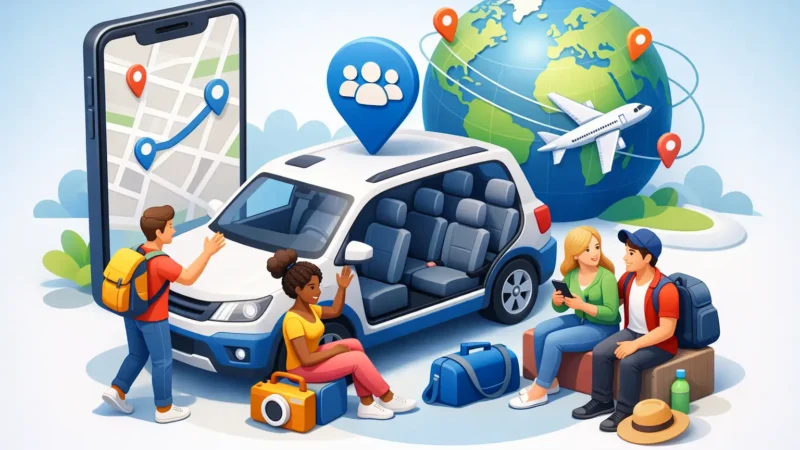
Shared Transport Apps That Make Every Trip Better

A half-empty car heading home from campus. A solo traveler landing at an airport after midnight. Two friends taking the same train, but buying separate rides to the station. These are the small gaps shared transport apps are built to close.
The best ones do more than book a seat. They help people moving in the same direction find each other, coordinate the details, and turn an expensive or lonely trip into a shared experience. 🚗🚌✈️🚲
For commuters, that can mean splitting gas. For backpackers, it can mean finding company for a long bus ride. For digital nomads, it may be the easiest way to get from an airport to a new neighborhood without paying for a private ride. The common thread is simple: if a trip has room for one more person, it can be shared.
What shared transport apps actually do
Shared transport is bigger than carpooling. Carpooling matters, especially for daily routes, but real travel rarely stays in one lane. People combine cars, taxis, vans, buses, trains, boats, bikes, and flights to get where they are going.
A useful shared transport app acts as the coordination layer between travelers. You post where you are going, when you plan to leave, how you are traveling, and whether you have room. Other people search for a route and timing that works for them. Then you chat, confirm the plan, and travel together.
That sounds straightforward because it should be. The friction is usually not finding transportation. It is finding the right person at the right time, with a plan you feel good about joining.
The difference between booking and matching
Traditional transportation apps generally sell a service: one person books a ride, ticket, or rental. Travel-matching apps help people connect around plans that already exist.
That distinction matters. A driver with two unused seats may want help with fuel costs. A passenger may be flexible about leaving Friday evening or Saturday morning. Two travelers might each be taking separate taxis from the same airport and decide to share one instead. Matching gives both sides room to make a better plan.
It also makes travel more human. You are not only choosing a vehicle. You are choosing whether the journey feels quiet, social, fast, budget-focused, or a little more spontaneous.
Why travelers use shared transport apps
The obvious benefit is cost. Dividing gas, tolls, parking, taxi fares, or other agreed trip expenses can make frequent travel much easier on a student or early-career budget. A seat that would otherwise go unused becomes useful. A passenger avoids covering the full cost alone.
But money is only part of the story. Shared travel can make awkward routes more workable. Maybe public transit ends before your shift does. Maybe the bus gets you close to a trailhead but not all the way there. Maybe the cheapest airport connection involves a late arrival and a 40-minute drive. Finding a compatible traveler can bridge the final stretch.
There is an environmental upside, too. When people fill open seats instead of taking separate vehicles for the same route, fewer cars may be needed. That will not replace public transit or solve every transportation challenge. It is simply a practical choice that can reduce wasted vehicle capacity when sharing makes sense. 🌍
Then there is the social side. A road trip with a new conversation can pass quickly. A first-time visitor may appreciate local recommendations on the way into town. Even a quiet commute can feel better when you are not navigating it alone.
How to choose a shared transport app
Not every app is designed for every kind of trip. Some focus only on daily work commutes. Others are built around on-demand rides or a specific transport network. If your travel is varied, look for an app that lets you match across different modes and distances.
Start with route flexibility. Can you search by departure and destination rather than only by a fixed city pair? Can you adjust dates or times when your schedule is open? Good matching should help you see realistic options without forcing every trip into a rigid template.
Next, consider the trip details you can share. A useful listing makes expectations clear before anyone commits. Departure time, pickup area, available seats, luggage space, transport type, and cost-sharing expectations all help people decide whether a match is a fit.
Messaging matters just as much. Plans change. Traffic happens. Flights run late. An in-app chat gives travelers a simple place to confirm meeting points, ask practical questions, and update one another without scattering trip details across different tools.
Finally, think about the community you want to find. A daily commuter may want reliability and a repeat route. A solo traveler may care more about shared interests, travel pace, or whether someone is also exploring after arrival. The strongest match is not always the closest departure time. It is the plan that works for both people.
Shared transport apps for more than cars
A mode-agnostic approach changes what is possible. Instead of asking, “Can I find a carpool?” you can ask, “Who is going my way, and how can we travel better together?”
Imagine flying into Denver with two other people headed toward the same mountain town. Sharing an airport ride can cut costs and reduce the stress of figuring out a new place alone. Or picture a group of festival-goers coordinating a van, a ferry crossing, and the final taxi to their stay. The trip is not one ride. It is a chain of decisions.
This is where platforms like TripShare stand apart. The idea is not limited to drivers and passengers in private cars. You can post or discover plans across cars, taxis, buses, boats, planes, vans, bicycles, and more. Any trip can have a social layer when travelers have a way to match and coordinate.
That flexibility is especially useful for people whose schedules and routes do not look like a standard commute. Freelancers, students, weekend explorers, and long-distance travelers often need options that work beyond 9-to-5 city travel.
Post, match, chat, travel ✨
The easiest way to use shared transport apps is to keep your trip post clear and honest. Say where you are headed, when you expect to leave, what mode of transportation you are using, and what you are looking for. If you have two seats open, say so. If you are looking to split a taxi after a flight, make that clear from the start.
When you browse matches, pay attention to the details that shape the actual experience. A nearby route is helpful, but timing, luggage needs, pickup points, and travel style can be just as important. Someone leaving 30 minutes later may still be a better match if they are headed to the same place and have room for your backpack.
Use chat to turn a possible match into a real plan. Confirm the exact pickup location. Agree on how expenses will be handled before the trip begins. Let each other know about changes early. A few clear messages prevent most avoidable confusion.
Then travel. Keep it simple, respectful, and flexible. Shared transportation works best when everyone treats the other person’s time, comfort, and boundaries as part of the plan.
Smart sharing habits for every trip
Traveling with someone new calls for good judgment. Meet in a public, well-lit place when possible, especially for a first trip. Review the route and timing before you leave, and tell a friend or family member your plans if that gives you peace of mind.
Be direct about money. “Split costs” can mean different things depending on the trip. Discuss whether you are dividing gas, tolls, parking, a taxi fare, or another expense. Confirm the amount and payment method before departure rather than trying to sort it out after a long day.
Respect preferences, too. Some people want to chat the whole ride. Others need to work, rest, or listen to a podcast. Asking a quick question such as “Are you up for conversation or a quiet ride?” sets a good tone without making things awkward.
And remember that flexibility has limits. If a listing feels vague, a person pressures you, or the plan changes in a way that no longer feels right, it is okay to pass. The point of shared travel is more freedom, not less.
Make the empty seat count
The next useful ride may already be happening around you: a coworker driving across town, a traveler leaving the same airport, a group heading to the same weekend event, or a neighbor taking the long route home.
Post the trip. Find your match. Send the message. A better journey can start with one open seat and a shared direction. 🚀