Multimodal Travel Apps for Better Shared Trips
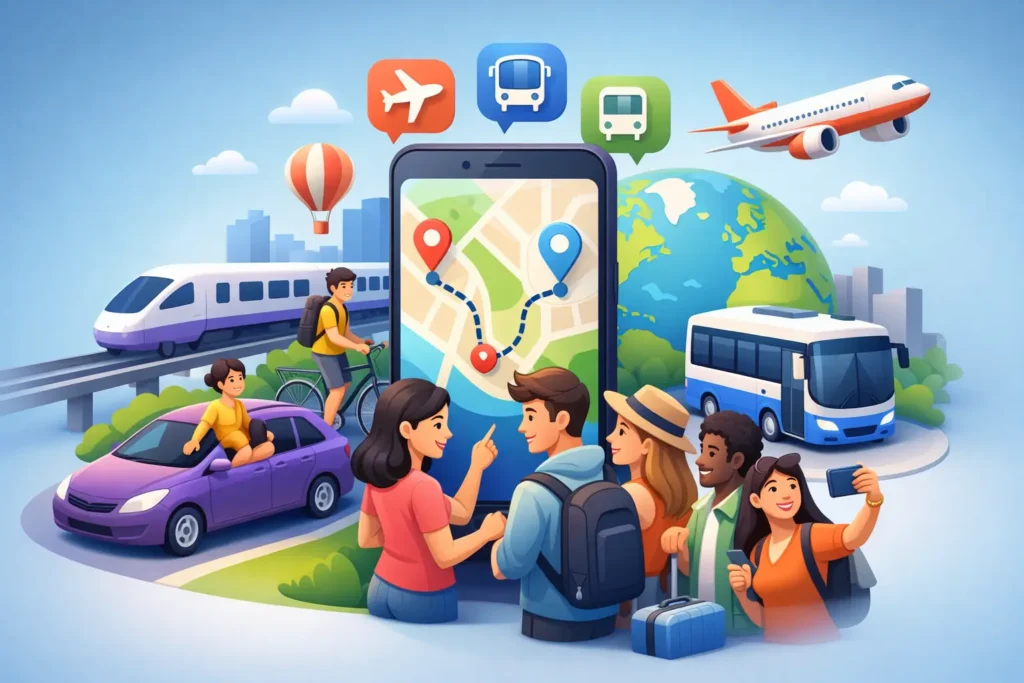
A weekend trip should not fall apart because your friend has a car, you have a train ticket, and someone else is arriving by bus. Multimodal travel apps bring those moving pieces together, helping travelers combine transportation options and find people headed in the same direction. 🚗🚌🚲✈️
For students heading home, digital nomads changing cities, commuters avoiding another expensive solo ride, and backpackers chasing a new trailhead, one mode rarely handles the whole journey. The better question is not, “What’s the fastest ride?” It is, “How can I get there in a way that fits my budget, timing, and travel style?”
What multimodal travel apps actually do
A multimodal travel app supports more than one way to move. That can mean planning a route that uses a car and a train, comparing bus and bike options, or coordinating a shared taxi to an airport after a flight lands. The strongest apps do more than show a map. They help people make the handoffs between parts of a trip easier.
That matters because real travel is rarely one clean line from Point A to Point B. You might catch a bus downtown, share a ride to the station, take a train across the state, then split a taxi to your final stop. Each leg has its own cost, schedule, luggage situation, and chance of going wrong.
Social travel matching adds another useful layer. Instead of merely seeing available transportation, you can find another traveler whose route, date, and plans line up with yours. A spare seat in a car can become a cheaper intercity ride. A solo airport transfer can become a shared taxi. A long drive can become a conversation with someone heading to the same event, campus, beach town, or neighborhood.
Why multimodal travel apps fit how people move now
Private car ownership is not the default for everyone. Many people live near transit, work remotely, fly often, or move between cities without wanting the cost and responsibility of owning a vehicle. Others have a car but do not want to drive every mile alone.
Multimodal options give travelers room to adjust. If a train is sold out, a ride share may cover the route. If gas is expensive, a bus or carpool can make more sense. If public transit gets you most of the way but not all the way, a shared ride can solve the final stretch.
The financial benefit is immediate. Splitting gas, tolls, parking, or a taxi fare can turn a costly trip into a manageable one. But cost is only part of the appeal. People also want choices that match their energy and priorities. Sometimes you need the lowest price. Sometimes you need the quickest route, room for a bike, a driver comfortable with luggage, or company for a late-night trip.
There is also an environmental upside. Filling unused seats and connecting transit with shared rides can reduce the number of empty cars making the same journey. It is not a perfect answer to every transportation challenge, but it is a practical way to use capacity that already exists.
The best trips are built around the connection points
A good multimodal plan is less about collecting transportation options and more about handling the transitions between them. That is where many trips become stressful.
Say you are traveling from a college campus to a music festival two states away. A bus gets you to the city, but the festival grounds are another 30 miles out. You could pay for a solo ride, wait for a limited shuttle, or match with fellow festivalgoers who have room in a car. The third option may save money and make the final leg more fun, especially if you can chat before you meet.
Or picture an airport arrival after midnight. Transit may have stopped running, and an individual taxi can be pricey. A travel-matching app can help you find someone landing around the same time and heading toward the same area. You are not forcing a complicated route. You are coordinating a common one.
These connection points are where travel apps should earn their place on your phone. Clear trip details, route and date filters, available-seat information, and in-app messaging all reduce the back-and-forth that usually happens in scattered texts and group chats.
Flexibility beats a one-size-fits-all route
The “best” mode depends on the trip. A bicycle may be perfect for a five-mile commute but unrealistic with a suitcase. A plane may save hours on a cross-country route, but you still need a way to reach the airport and leave it at the other end. A car can be convenient, yet parking fees and fuel may make it less appealing for a city weekend.
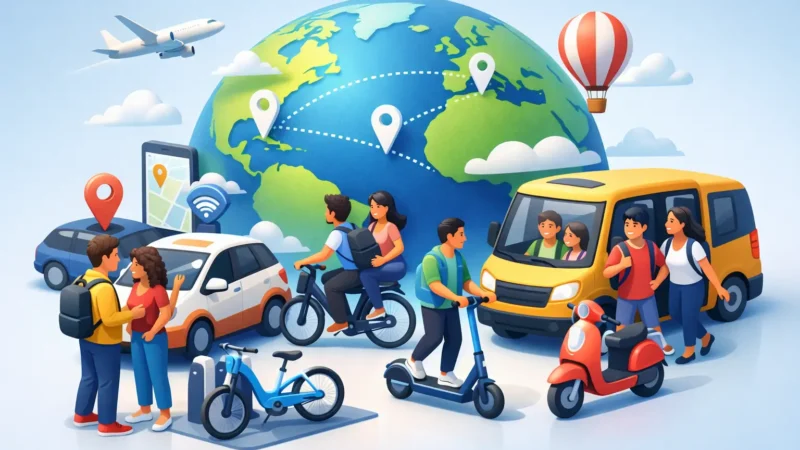
That is why mode-agnostic travel matters. It does not ask every traveler to behave like a daily car commuter. It makes room for cars, taxis, buses, vans, boats, planes, bikes, and the combinations in between.
How to use a travel-matching app without overcomplicating it
The simplest workflow is also the most useful: post, match, chat, and travel. 📍
Start by posting a trip with the details that actually affect a match: departure and destination, date, approximate timing, transportation method, and whether you have seats or need one. If you have flexibility, say so. “Leaving Friday afternoon” creates more opportunities than a vague “sometime this weekend,” while still giving people room to coordinate.
Next, look for travelers who match your route and timing. A perfect match is great, but nearby pickup points, similar arrival windows, and a compatible travel style can work just as well. Someone may be driving through your area on the way to the same destination. Another traveler may be open to splitting the first or final leg of a larger trip.
Then chat before committing. Confirm the basics: pickup location, expected cost split, luggage space, stops, arrival expectations, and how you will handle delays. If you are sharing a taxi, agree on the destination order and fare split. If you are joining a longer drive, ask about breaks, music, pets, smoking preferences, and anything else that affects comfort.
TripShare is built around this kind of coordination across any trip and any mode, giving travelers a place to post plans, find route matches, and sort out details in one conversation.
A few smart checks before you share a trip
Travel together, but keep your judgment switched on. Read profiles carefully, communicate in the app before sharing personal contact details, and make sure the plan is specific enough to verify. Meet in a public, well-lit place when possible, especially for a first shared ride.
Trust your instincts. If someone avoids basic questions about timing, costs, or the route, choose another option. If plans change, update the other traveler quickly. Reliability is part of being a good match, whether you are offering a seat, splitting a cab, or meeting at a station.
It also helps to keep a backup plan. Transit delays happen. Flights shift. Drivers get stuck in traffic. Know the next bus, a nearby pickup point, or the cost of an alternative before you leave. Flexibility works best when it is paired with a little preparation.
Shared travel is about more than getting there
A multimodal trip can be purely practical, and that is enough. Maybe you split an airport ride, save $20, and never see your match again. But sometimes the trip becomes part of the experience. You find a study buddy for the ride home, a local tip for a new city, or a fellow traveler who makes a long stretch of highway feel shorter.
That is the real opportunity behind multimodal travel apps. They turn disconnected transportation choices into shared possibilities. Post the trip you are already taking. Find the people moving your way. Then make the route work better for everyone. 🌎