
10 Best Airport Transfer Apps for Easier Arrivals
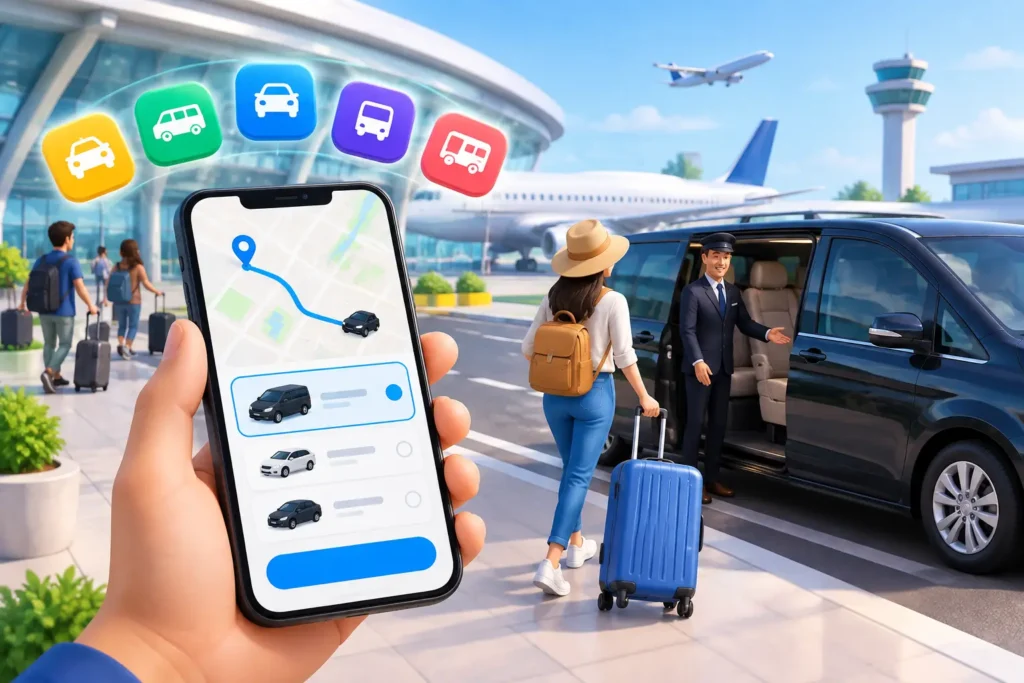
The plane has landed. Your phone is at 18%, the rideshare pickup zone is three terminals away, and surge pricing is asking for more than your flight upgrade. The best airport transfer apps give you options before that moment hits – whether you want a private ride, the lowest-cost bus, a seat in a shared shuttle, or someone headed your way.
For independent travelers, the smartest airport transfer is rarely about finding one perfect app. It is about choosing the right kind of ride for your arrival time, budget, bags, group size, and comfort level. Here are 10 apps worth having on your phone before takeoff. ✈️
1. Uber: Best for fast, familiar rides
Uber is the default choice for plenty of US travelers because it is easy to use in most major airport cities. Enter your destination, choose a ride type, and follow the airport-specific pickup instructions in the app. If you are arriving late, carrying heavy luggage, or heading somewhere that transit does not reach well, that convenience can be worth it.
The trade-off is price. Fares can jump sharply after a big flight arrival, during bad weather, or when an event is ending downtown. Check the estimated price before confirming, and compare it with another option if the number feels high. Uber Reserve can also be useful when you want to arrange a ride ahead of time, though availability and pricing vary by airport.
2. Lyft: Best for comparing rideshare prices
Lyft works much like Uber, which is exactly why it belongs on the same phone. At busy airports, one app may have a shorter wait or a noticeably lower price than the other. A 30-second comparison can save enough for coffee, lunch, or a local transit pass.
Lyft is especially handy for travelers landing in cities where rideshare pickup areas are well organized. Still, do not assume the driver can stop at every terminal door. Many airports require rideshare pickups from a designated garage, curb, or lot. Read the pickup notes before you start walking.
3. Curb: Best for licensed taxi rides
Curb connects riders with licensed local taxis in participating US cities. That matters when you prefer a professional taxi line, need a car with room for luggage, or are arriving at an airport where taxis have a simpler pickup setup than rideshares.
Taxi pricing can be easier to understand in some cities, particularly where airport-to-downtown fares are fixed or closely regulated. On the other hand, Curb is not available everywhere, and its coverage is more limited than the biggest rideshare apps. Think of it as a strong backup, not your only plan.
4. Wingz: Best for scheduled airport pickups
Wingz focuses on pre-booked rides, making it a good fit for travelers who do not want to gamble on an early-morning pickup or a late-night arrival. You can schedule a ride in advance and see pricing before your travel day. That can make expense planning much less stressful.
This option makes the most sense when timing matters more than getting the absolute cheapest ride. It is useful for work trips, families with kids, or travelers staying outside a city center. Coverage is selective, so check your departure and arrival cities before relying on it.
5. GetTransfer: Best for comparing private transfer offers
GetTransfer is built around requesting a transfer and reviewing offers from drivers. That can be appealing when you need something more specific than a standard rideshare – a larger vehicle, extra luggage space, a child seat, or a trip from the airport to a resort or smaller town.
The benefit is choice. The caution is that service quality can vary because you are selecting among providers. Look closely at vehicle details, reviews, cancellation terms, waiting time, and whether tolls or parking fees are included. A low initial quote is only a deal if the final terms are clear.
6. Welcome Pickups: Best for a meet-and-greet arrival
Welcome Pickups is designed for travelers who want a driver waiting after landing. That is a calming option in an unfamiliar city, after a long international flight, or when you are traveling with someone who would rather avoid figuring out local pickup zones.
Meet-and-greet service is generally more expensive than public transit or a standard rideshare. But the value is not just the car. It is the reduced friction: a named driver, clearer arrival instructions, and less time standing outside comparing options. For a first night in a new place, that can be a fair trade.
7. Citymapper: Best for airport-to-city transit routes
Citymapper shines when your airport has strong rail, subway, bus, ferry, or bike connections. It maps routes with live-style transit guidance and can help you compare a direct airport train with a cheaper bus-plus-subway combination.
This is the app for travelers who would rather spend $10 on transit than $55 on a car. It also helps you see the real cost of convenience. A rideshare might save 20 minutes, but an airport express train could avoid traffic, drop you in the center, and leave more room in your budget for the trip itself.
8. Transit: Best for real-time local departures
Transit is a practical companion when the airport connection involves local buses, trains, and shuttles. In cities with frequent service, it can help you spot the next departure and understand whether you have time to buy food, find an ATM, or head directly to the platform.
Public transit is not always the right call. It can be tough with oversized bags, after midnight, or if you are traveling with a group. But for solo travelers, students, backpackers, and anyone arriving during daytime service, it is often the most affordable transfer available. 🚌
9. Moovit: Best for broader transit coverage
Moovit is another useful transit app, particularly when you are traveling beyond the biggest metro areas. It can help make sense of buses, commuter rail, and local transfer points that may not be obvious from the airport website.
Use it to double-check a route rather than treating any app as the final word. Airport service changes, holiday schedules, and construction can affect the last leg of your journey. Screenshot your route before leaving Wi-Fi, and keep enough battery for a backup plan.
10. TripShare: Best for sharing the journey
Sometimes the best airport transfer is not a solo ride at all. TripShare helps travelers post a trip, match with people traveling along a similar route, chat in-app, and coordinate how to get there together. That could mean splitting a taxi from the airport, joining a car ride to a nearby city, or finding a travel companion for a bus, ferry, or train connection.
It is a particularly useful idea when the airport is far from your actual destination. A ride from Denver International to Boulder, from LAX to Santa Barbara, or from a regional airport to a campus town can get expensive alone. Sharing the route can lower the cost and make the arrival feel less anonymous. Share rides. Split costs. Meet travelers. 🚗
How to choose among the best airport transfer apps
Start with your non-negotiable. If you land at 1 a.m., prioritize a scheduled ride, taxi, or rideshare with clear pickup instructions. If you are arriving at noon with one backpack, check rail and bus options first. If you are traveling with three friends, compare the cost of one larger car against four transit fares – the answer may surprise you.
Then check the full trip, not just the first price you see. Add airport fees, tolls, a tip where appropriate, and possible surge pricing. For transit, factor in the cost of getting from the final station to your hotel. For shared travel, agree on the pickup point, luggage space, payment split, and timing before you leave the terminal.
A little prep changes the whole arrival. Download two ride apps, one transit app, and save your destination offline before your flight. When the cabin doors open, you will have choices – and more of your travel budget left for the places you came to see. 🌎