Carpool Smarter and Make Every Mile Count
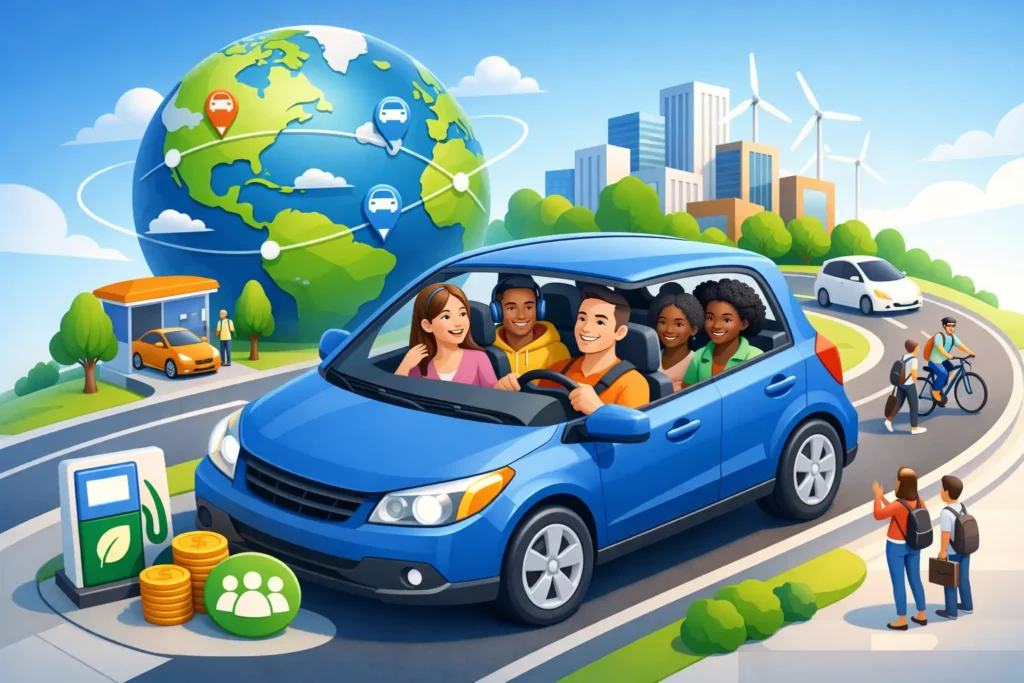
A nearly empty car in rush-hour traffic is expensive. The driver pays for fuel, parking, tolls, and wear on the vehicle, while everyone else on the same route pays for their own ride too. A carpool changes that math. Share the seats already moving, split the cost, and make the trip feel less like dead time.
For students crossing campus, coworkers heading downtown, weekend travelers leaving for the mountains, and digital nomads moving between cities, the idea is simple: travel with people going your way. The best part is not just the lower price. It is the extra conversation, the backup plan when transit runs late, and the small feeling that you are not doing every journey alone. 🚗
What a Carpool Really Solves
A carpool is two or more people sharing a vehicle for all or part of a trip. It can be a regular commute with the same people every week, a one-time airport run, or a long-distance ride between cities. One person drives, passengers contribute to trip costs, and everyone agrees on the essentials before departure.
That sounds basic, but the value reaches further than a cheaper tank of gas. Driving alone gives you total control, but it also puts every cost and every decision on one person. Shared rides spread out the burden. A passenger may avoid owning a car or paying for parking. A driver can make use of empty seats and reduce the cost of a trip they were already taking.
There is an environmental side, too. One shared car is not automatically greener than every alternative. A full bus, train, bike trip, or walk may have a lower impact, depending on the route. But when the realistic alternative is several people taking separate cars to the same place, carpooling can reduce the number of vehicles on the road. Fewer cars can mean less congestion, less fuel burned, and fewer parking headaches.
Then there is the human reason. The right ride can turn a quiet commute into an easy conversation, a road trip into a shared adventure, or an unfamiliar route into a more comfortable experience. You do not need to become best friends. You just need a match that respects the trip.
When Carpooling Makes the Most Sense
Carpooling works especially well when routes overlap and timing has a little flexibility. Daily commutes are the classic example, particularly when parking is pricey or public transit requires multiple transfers. But one-time rides can be just as useful: concerts, festivals, campus breaks, ski weekends, airport trips, conferences, and visits home.
Longer trips can create bigger savings because fuel and tolls add up fast. Still, they require more coordination. A 20-minute ride to work may only need an agreed pickup point. A four-hour drive needs clarity on luggage, rest stops, music, food, smoking, pets, and arrival plans. Small details prevent awkward surprises.
It also depends on your priorities. If you need to leave at exactly 6:07 p.m. every day and cannot wait five minutes, driving alone may be a better fit. If your schedule shifts, look for travelers who are flexible within a time window. Great shared travel is not about forcing a match. It is about finding one that makes life easier for everyone.
Post, Match, Chat, Travel
The easiest way to organize a carpool is to make the trip clear from the start. Think like a good host: give people the information they would need to decide quickly and confidently.
Post the trip details
Share your starting area, destination, date, and preferred departure time. If you are driving, say how many seats are available and whether there is room for large bags. If you are looking for a ride, mention your pickup flexibility and anything that affects the trip, such as a flight departure or a need for a child seat.
Avoid posting more personal detail than necessary. A nearby public pickup point is often better than a home address, especially for a first ride. Keep the plan practical and easy to understand.
Match on more than a route
A route match matters, but travel style matters too. Some people want a quiet ride to catch up on work. Others enjoy chatting and stopping for coffee. A driver may prefer no smoking, no pets, or one carry-on bag per passenger. None of these preferences are unreasonable. They simply need to be known before the ride begins.
Look for alignment on timing, pickup location, cost expectations, luggage space, and comfort level. A slightly less convenient route with a reliable, communicative traveler can be a better choice than the closest possible match with vague plans.
Chat before you commit
Use in-app messaging to confirm the essential details. Agree on the pickup spot, departure window, estimated cost contribution, payment method, and what happens if someone is running late. For longer rides, confirm the destination address or final stop and discuss breaks.
This is also the moment to ask direct questions. Is the driver taking toll roads? Is there space for a suitcase? Can the passenger meet at a transit station instead of adding a detour? Clear questions are not awkward. They are how a shared trip stays easy.
Travel with a simple plan
On the day of the ride, confirm that both people are on the way before leaving for pickup. Share a practical description of the vehicle if needed, and choose a public, well-lit meeting point. Be ready when you say you will be ready. Reliability is the fastest way to become someone people want to travel with again.
If a plan changes, say so early. Traffic, work meetings, and delayed trains happen. Silence is what turns a minor delay into a frustrating one.
How to Split Carpool Costs Fairly
Cost sharing does not need a complicated formula. For many trips, passengers split fuel and tolls based on how far they ride. For a regular commute, a weekly contribution may be simpler than calculating every mile. If parking is part of the trip, decide whether it is shared before the car leaves.
The goal is not to turn every ride into a business transaction. It is to make sure the driver is not carrying all the costs and passengers know what they are contributing. Discuss the amount before the trip, not while someone is already unloading bags at the destination.
There are trade-offs. A driver absorbs maintenance, insurance, and the responsibility of operating the vehicle, so a simple equal split may not reflect every expense. At the same time, a passenger should not face an unexpected price that feels higher than other transportation options. Transparency keeps the arrangement fair.
For recurring rides, revisit the plan occasionally. Fuel prices change. Someone’s schedule changes. A pickup detour that seemed minor at first may become inconvenient over time. A quick check-in protects the relationship and the routine.
Carpool Safety Starts Before the Pickup
Shared travel should feel welcoming, not careless. Trust your instincts and give yourself room to make a different choice. If someone will not confirm basic details, pressures you to share private information, or changes the plan repeatedly, it is okay to decline the ride.
For a first-time match, meet in a public place and tell a friend where you are going. Keep your phone charged. Confirm the vehicle and driver before getting in, and use in-app messaging so the trip details stay in one place. Drivers should also set boundaries: do not accept more passengers than the vehicle can safely hold, and do not drive when tired or impaired.
Respect goes both ways. Passengers should be on time, treat the car carefully, and follow agreed rules. Drivers should communicate clearly, drive safely, and avoid last-minute surprises. A good carpool is built on ordinary courtesy, repeated consistently.
Think Beyond the Commute
A shared trip does not have to begin and end in the same car. Maybe you carpool to a train station, split a taxi after landing, share a van to a trailhead, or coordinate a ride home after a late event. That is where a broader travel network becomes useful.
TripShare is built for that bigger picture: post a journey, find travelers on a similar route, chat through the details, and travel together across more than one mode. 🚕 🚌 🚲 The vehicle matters, but the connection is the point.
Your next ride may save a few dollars. It may also introduce you to a fellow student, a future hiking buddy, or simply someone who makes a long drive go faster. Post the trip you are already taking, leave room for the right match, and let the road feel a little more shared.